Casino Gamblers vs. Sports Bettors: What Data Says About Their Playing Styles
 Jacob Mitchell
A clear distinction between the two groups is required for the operators, analysts, and responsible gaming departments to design products and safer play products. This page offers the solution in terms of data from 2022 to 2026. On average, sports bettors make 50 bets yearly, while casino players engage 7.5 times yearly. The discrepancy indicates that the two groups are different if you interpret the data demographically. CasinoRank explored the difference between the two through a data-oriented analysis. The results are provided below.
Trends and Player Behavior
The two primary pillars in the iGaming market are casino games and sports betting. Both forms attract their respective groups of players based on distinct approaches. Casino games are attractive because of the random elements in play for the player. On the other hand, sports gambling involves placing bets strategically to predict the outcomes of live sporting events.
Difference Between Casino Gamers and Sports Bettors
Three key differences exist between these two groups. These are age, frequency, and money spent.
- Age difference is 11.6 years. Casino gamers have an average age of 43.6 years. Sports bettors are younger, with an average age of 32.
- Frequency of participation is another major difference. Casino gamers participate 7.5 times annually. Sports bettors make 50 bets each year.
- Finally, the two groups differ in money spent annually. Casino gamers spend around $1,125 each year. Sports bettors spend around $2,000 each year.
All these data prove that casino gamblers have wider demographics than sports bettors.

Casinos vs. Sports Bettors: The Players
Players play how they do due to who they are. Age, gender, and income paint a unique picture of the audiences that drive each iGaming platform. Below we discuss each audience, backed by factual research.
Who Are Casino Gamblers?
Casino gambling comes with three specific attributes. They include age being higher, gender being evened out, and income being mid-level.
- The average age is 43.6 years, according to the American Gaming Association (2022). Casino gamblers tend to be older than sports bettors.
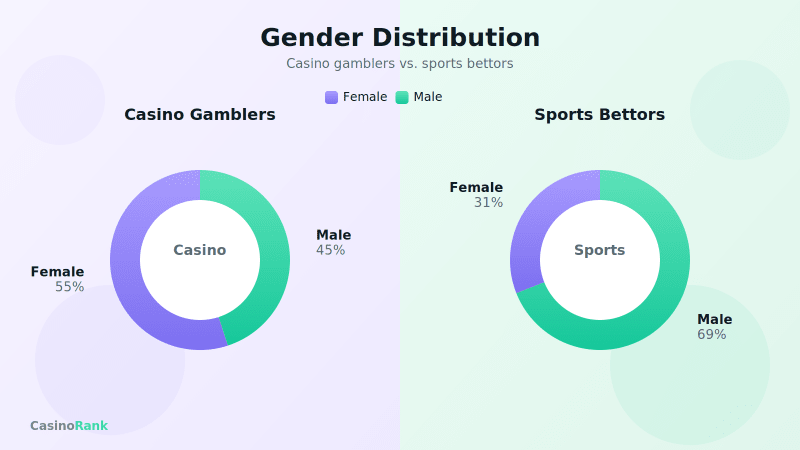
- The male-to-female ratio is more females with 45% males and 55% females, reported by JobMonkey. An evened-out gender split means wide acceptance.
- The average income level is estimated to be near $70,000 per year, based on BrandonGaille.com analysis.
Who Are Sports Bettors?
There are three characteristics that characterize sports bettors. They include low mean age, high male dominance, and high income.
- Age is estimated at 32 years, with 39% aged below 35 years, according to Birches Health. Sports bettors tend to be younger than casino gamblers.
- Gender composition leans towards males, with 69% males and 31% females, according to Birches Health. This shows the target demographic.
- Income tends to be high, with 44% of the population earning more than $100,000 annually, according to Birches Health. It shows that sports bettors belong to high-income earners.
The difference is obvious. While casino gamblers are made up of an even number of individuals with average income levels, sports bettors represent a young male population with higher incomes. It reflects the type of product offered and the target market of sports gambling. Readers interested in a wider view of the product may read about the appeal of casino games.
Expert insight: The age gap drives most of the behavioral split. A 32-year-old sports bettor treats casino wagering as a recurring habit tied to live events. A 43-year-old casino gambler treats play as occasional entertainment. Product design follows from that single difference.


Psychological Differences between Casino Gamblers and Sports Bettors
Both casino gamblers and sports bettors have a love of gambling, but their psychological perspectives differ significantly. Casino gamblers go for the excitement of games based on the element of chance, while sports bettors pursue the exhilaration of analytical betting.
Entertainment vs. Chance
The two psychological categories into which these two types of gamblers can be classified include entertainment-oriented and strategy-oriented.
- The entertainment-oriented gambler is one who plays casino games for entertainment purposes only. They play slots and casino table games for the fun of the unknown.
- The strategy-oriented gambler views his/her bets as an analytical endeavor. He/she relies on statistical data and believes in his knowledge making him/her successful.
The entertainment-oriented gambler thrives on chance. The strategy-oriented gambler enjoys betting as a strategic venture.
Risk-Taking and Decision Making
Two distinct risk profiles differentiate between the two user bases. They include luck-oriented and research-oriented.
- The casino players depend on luck more than on any strategy. The element of randomness in casino games is what makes the gaming experience long-lasting with consistent betting behavior.
- On the other hand, sports gamblers depend on research than luck. The fact that these games are related to events happening in the outside world leads to riskier bets based on current odds and trends.
Such psychological differences determine product design. Time limitations and spending limitations work great for casino gamblers, while the latter group would greatly appreciate risk management and bankroll management options.
Casino Gamblers and Sports Bettors' Gambling Behavior
Behavioral patterns can be identified through frequency, spending habits, and behavioral patterns of players. The following analysis will identify behaviors exhibited by casino gamblers and sports bettors based on information sourced from publications. Engagement Frequency and Amount
Two distinctive engagement patterns exist that help to differentiate between the two kinds of gamblers. These include: infrequent-and-large and frequent-and-small.
- Casino gamblers tend to engage in gaming 7.5 times annually at a cost of $150 per visit, according to LVCVA data.
- Sports bettors tend to gamble about 50 times annually at an average cost of $40 per bet.
Strategy versus Luck
There are two types of outcome patterns that distinguish these two. They include luck-oriented and strategy-oriented.
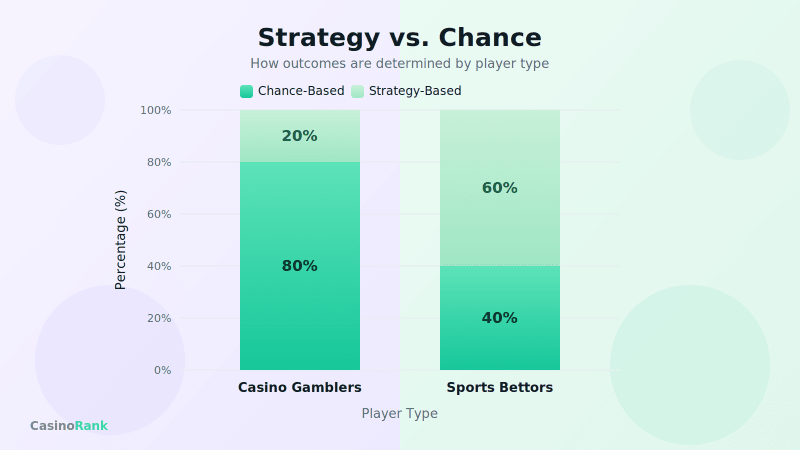
- Casino gambling is about 80% luck oriented due to slot games and roulette, according to SOFTSWISS. The element of luck builds up excitement and instant satisfaction.
- Sports gambling is about 60% strategy oriented because sports bettors use their knowledge of the teams and statistics, as reported by ResponsibleGambling.org. This makes betting a strategic exercise.
The conclusion is clear. The casino gamblers have luck-based gambling sessions that are longer. The sports bettors make regular gambling decisions based on their strategic skills.
Player Preferences Depending on Region
The trends at the global level make it clear where to draw the line for casino gambling versus sports betting. Local trends reinforce this differentiation. Here, we look into what role player preferences play in influencing engagement in three main iGaming regions.
Gambling Trends in North America
North America has its own take on gambling that includes both traditions and innovations. Player pools vary by age and technology level.
- Players of casinos tend to be older, with an average age of 43.6. The preference for slot machines, arcade-style games, made by Everi reigns here.
- Sports betting enthusiasts are younger in age, with the average being 32 years old. The market is mobile-first and high-frequency, allowing 50 bets per year according to Birches Health.
Wagers from European Gamblers
The iGaming industry in Europe offers casinos as an attraction alongside sports games in terms of a betting culture. Demographic characteristics of players coincide with these differences.
- Casino gaming attracts a balanced distribution by gender, which stands at 45% males and 55% females. European gamers favor games of chance, including slots by Pragmatic Play.
- Sport bets are skewed by gender at 69% for males. These wagers involve more strategic considerations, according to SOFTSWISS.
Rapidly Developing Gaming Industry in Asia
In the context of an advanced technology-first economy, the iGaming market in Asia is developing rapidly in terms of preferences for online casinos and sports betting.
- Casino gamers tend to use desktop devices, according to information from PMC. In contrast to European players, Asian gamers tend to play for longer intervals.
- Sports betting experiences an increasing popularity via live events and mobile devices, according to SOFTSWISS. Live wagers reflect a rapid pace of Asian life.
It is obvious that regional features accentuate the difference between online casino users and sports bettors on a global level.

Unexpected Gambling Patterns
There are two patterns from the data that emerge beyond surface-level trends. The first is the income disparity, while the second is the risk disparity.
- Income disparity exists in an unusual way. According to Birches Health, sports bettors earn more than $100,000 per year at a rate of 44%. Meanwhile, casino gamblers earn about $70,000, according to BrandonGaille.com. The richer category is the younger category.
- Risk disparity exists through different methods. Sports bettors experience more problem gambling due to faster pace, according to Stateline. Casino gambling risk depends on long durations, according to PMC.
This changes our understanding. Sports bettors have both wealth and risk through frequency. Casinos have both a medium income level and risk through endurance.
Frequency is the strongest predictor of harm in sports betting. Session length is the strongest predictor in casino play. Effective safer-gaming tools target the right variable for each group rather than copying one approach across both.
Insights for iGaming Operators
There are four important considerations that arise out of the characteristics of the two audiences.
- Casino operators should create immersive and random games aimed at casino gamblers. They must mirror the 50/50 gender ratio and the high mean age of 43.6 years.
- Sportsbook operators must create analytical games and betting systems that allow users to make bets during live games. They must mirror the mean age of 32 years and the 44% proportion earning over $100,000.
- Operators must consider the high betting frequency of sports bettors, with an average of 50 bets in a year, in their development of tools for promoting responsible gambling.
- Gamblers should be able to limit their expenditure because of the high problem-gambling rate among sports bettors. Casino operators should focus on limiting session length due to the higher expenditure of $150 per visit.
Readers interested in knowing why the house always wins can find out more here.
Methodology
The methodology used in this analysis includes a data collection procedure that is meant to provide an accurate profile of both casino gamblers and sports bettors. Reliable sources provided data such as the American Gaming Association, Birches Health, USA Today, SOFTSWISS, PMC, and BrandonGaille.com. The period covered by the scope extends from 2022 to 2026. Information about recent trends regarding the age, gender, income, and other characteristics of players is included in this analysis. This will allow stakeholders to benefit from the findings.
Conclusion
In conclusion, the main aim of this analysis was to make it possible for operators to distinguish casino gamblers from sports bettors based on various factors such as demographics, engagement, and psychology. It is necessary to know these differences to increase the effectiveness of their operations. The fact that casino games and sports betting are converging creates problems and opportunities for operators. By understanding the behaviors of each type of player, operators can become more successful in providing them with the best services.
Frequently Asked Questions
How often do people gamble at online casinos each year?
Casino players gamble around 7.5 times per year. Each session costs approximately $150. The pattern reflects fewer but longer sessions focused on slots or table games.
What are the key differences in player engagement between casino and sports betting platforms?
Casino gambling centers on longer, fewer sessions focused on entertainment and chance. Sports betting centers on frequent, smaller wagers rooted in real-world events and data analysis. These patterns shape platform UX and responsible-gaming design.
How do demographics influence gambling behavior in online casinos and sports betting?
Demographics shape play styles directly. Older, gender-balanced, middle-income groups gravitate toward casinos for entertainment. Younger, wealthier, male-dominated audiences prefer the strategy of sports betting.
Who typically participates in online sports betting?
Sports betting audiences are predominantly male at 69%, with an average age of 32. A 44% share earns over $100,000 per year. The profile points to a young, affluent demographic.
What drives high-frequency betting among sports bettors?
Sports bettors place around 50 bets per year. Live sports, seasonal events, and real-time odds drive the frequency. The pace reflects habitual engagement tied to ongoing sports calendars.
How do regional trends shape online gambling preferences?
Asia favors mobile sports betting while keeping casinos desktop-oriented. Europe shows a diverse casino audience and a male-heavy sports betting market. North America skews older for casinos and mobile-savvy for sports. These behaviors guide content and UX strategy.